
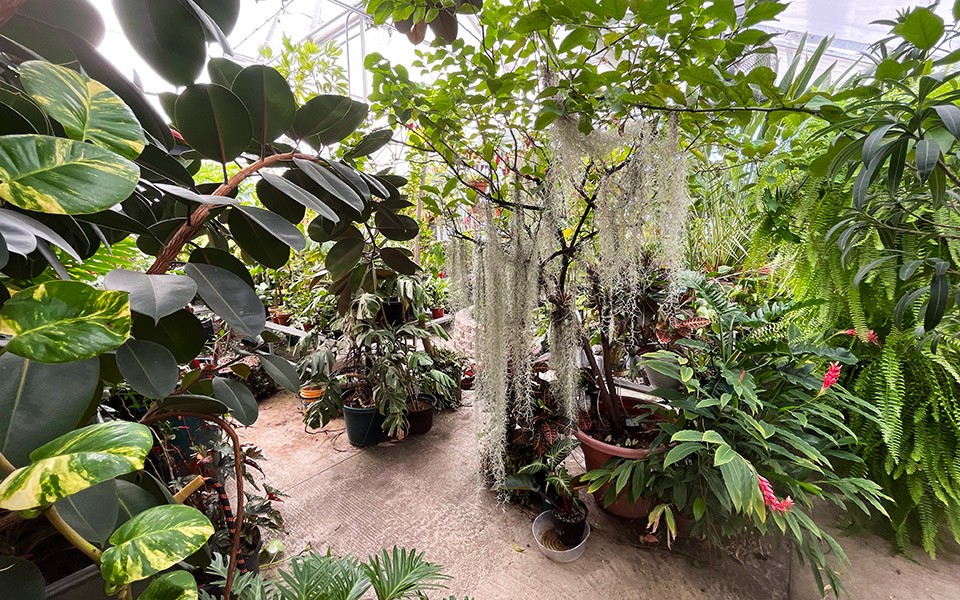
Photo: A lush view of Eastern Michigan University’s greenhouse, showcasing a vibrant collection of organically grown plants and flowers in a peaceful, thriving environment
Photo Credit: Eastern Michigan University. (2023). EMU greenhouse filled with vibrant, organically grown plants [Photograph]. Today@EMU. https://today.emich.edu/story/story/12450
May 2, 2025
By Robert Korns with Emily Thompson
Spring is coming, and gardeners everywhere are itching to bring their plants back to life. But hold up—before you grab that pesticide to protect your crops, you need to know what else it’s doing. What’s the real cost? These chemicals don’t just kill pests—they impact the soil, local wildlife, and even your health. The good news? There are safer, smarter ways to grow a thriving garden.
The impacts of pesticides go far beyond your garden. These chemicals seep into the soil, disrupting the delicate balance of microorganisms that keep plants healthy. Runoff can contaminate nearby water sources, harming fish and other wildlife. Even beneficial insects like bees and butterflies—essential pollinators for your garden—aren’t spared. And for us? Residues can linger on produce, increasing exposure to harmful toxins. The European Environment Agency reports that chemical pesticides remain a major source of pollution, significantly driving biodiversity loss and potentially harming both users and surrounding communities. Thankfully, there’s a better way to protect your plants and the planet: by using companion planting, natural pesticides, and diatomaceous earth, gardeners can foster healthier ecosystems while keeping pests at bay.
Companion planting is a simple yet effective way to naturally deter pests while promoting healthy plant growth. By strategically planting certain herbs, flowers, and vegetables together, you can create a protective barrier for your garden. For instance, marigolds release a scent that repels aphids and nematodes, while basil wards off mosquitoes and tomato hornworms. Not only does this method keep pests away, but it also encourages biodiversity, attracting beneficial insects like ladybugs and bees to further support your garden’s ecosystem.
Neem oil, derived from the seeds of the neem tree, is a powerful natural pesticide that targets pests without harming beneficial insects when applied correctly. It works by disrupting the life cycle of common garden pests like aphids, whiteflies, and caterpillars, preventing them from feeding and reproducing. Unlike chemical pesticides, neem oil doesn’t pose a threat to pollinators such as bees and butterflies, making it an eco-friendly option for protecting your plants. Regular application can keep infestations at bay while maintaining a balanced garden environment. To learn more about Neem Oil check out this video about its use!!
is another excellent organic solution for pest control. This fine, powdery substance is made from fossilized algae and works by damaging the exoskeletons of soft-bodied insects like slugs, aphids, and ants, causing them to dehydrate and die. While deadly to pests, it remains harmless to humans, pets, and beneficial insects when applied carefully around the base of plants. It’s especially useful for keeping crawling insects away from your vegetables and flowers without introducing harmful chemicals into the soil. DE can be applied in several ways: you can use a sifter or even a brush to spread the powder on the ground around your plants. For more information, check out this video, which details the equipment needed as well as how to use it.
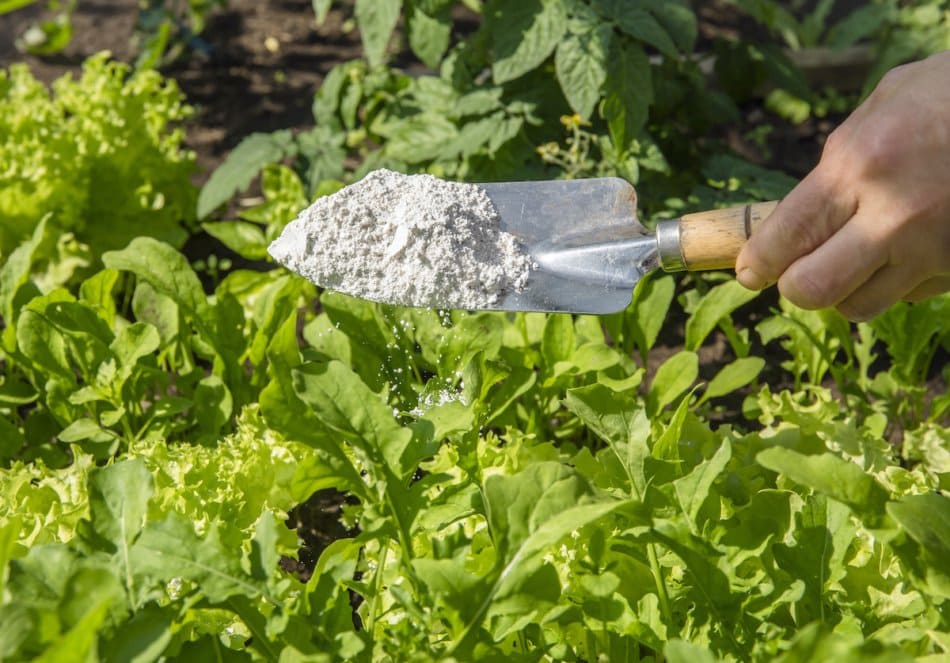
Photo : A gardener carefully applies diatomaceous earth with a trowel, creating a protective barrier to deter crawling pests around leafy greens
Photo Credit: Farmers’ Almanac. (n.d.). What is diatomaceous earth? https://www.farmersalmanac.com/what-is-diatomaceous-earth
You don’t need harsh chemicals to grow a strong, beautiful garden. With a few simple, natural strategies, you can protect your plants, support pollinators, and nurture the earth—all while keeping pests in check. Ready to garden smarter and safer? Here are three easy actions you can take today:
Things You Can DO to keep your garden safe:
- Plant smart: Pair naturally pest-deterrent plants
- Spray safe: Use neem oil to stop bug
- Dust it off: Sprinkle diatomaceous earth to keep crawlers away.
References:
MSU | Early insect control with horticultural oils
MSU | Companion planting tips for families
EEA | How pesticides impact human health and ecosystems in Europe
 Center for Sustainability and Resilience at WCC
Leave a comment