
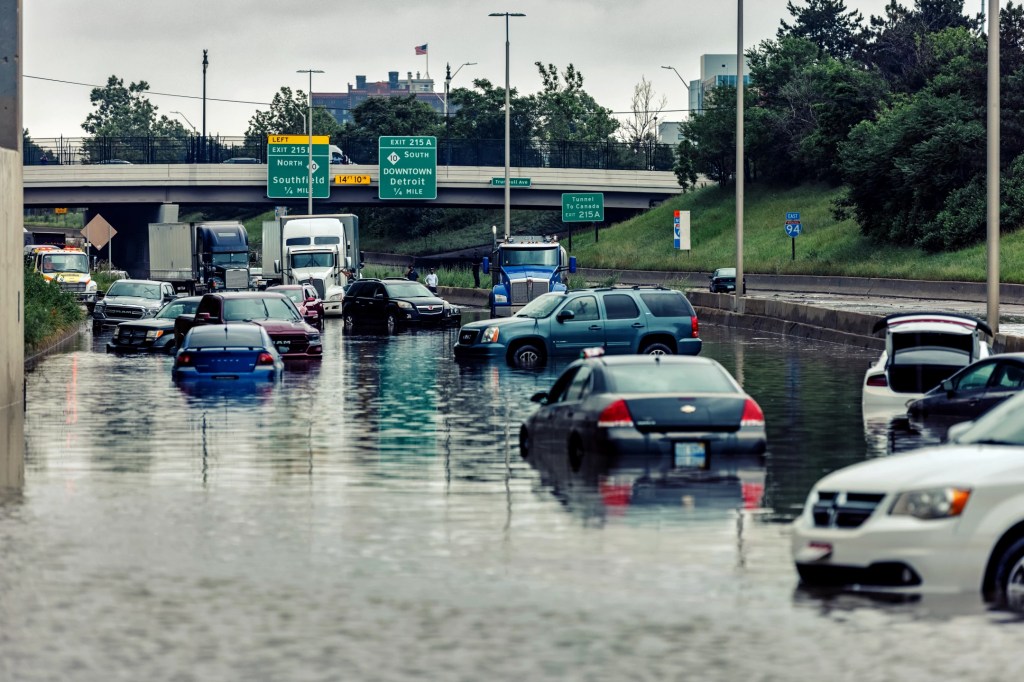
Photo Credit: Gall, J (2021). Detroit Flood [Photograph]. WXYZ Detroit. https://www.wxyz.com/weather/flooding-hits-grosse-pointes-detroit-livonia-garden-city-and-more
Photo Legend: Several motor vehicles are stuck and abandoned at a flood point on a major highway in Detroit, MI.
By Wanda Bush and Emily Thompson
April 10, 2025
Wildfires running rampant through the Pacific Northwest. The Northeast, frozen during a polar vortex. And now, as warmer weather moves into the Midwest, we face increased chances of tornadoes, storms, and flooding. Power outages can happen at any time of year and often do, during these extreme events. No one wants to imagine being caught in a natural disaster, but if something were to happen today, would you and your family be ready? Do you have a plan? Do you have what you need to act quickly? One of the goals of the WCC Center for Sustainability and Resilience is to help our community bounce back from these types of challenges. Having an emergency kit at home, in your car, or at your office is a small but powerful way to build resilience and prepare for the unexpected.
A2Zero has partnered with WCC in a series of Emergency Workshops, helping to give advice on emergency kits for students, staff, and faculty alike, so they are ready to respond if disaster strikes. Bryce Frolich and other A2Zero representatives walked attendees through the types of items that are especially helpful in the Great Lakes region, where we’re prone to flooding, tornadoes, and power outages. These kits typically include basics like a first aid kit, flashlight, whistle, hand-crank radio, personal hygiene items such as toilet paper, and batteries. Just remember to program your radio ahead of time! Store your kit in a waterproof container such as a 5-gallon bucket or sealed plastic tote to keep everything dry and usable when you need it most. Outside of the kit, remember to store drinking water and canned food for several days and a can opener to open the cans.
While these are just the essentials, you may want to build your kit based on your specific needs. Households with pets or individuals who require special care may need extra items set aside such as medications. Avoid packing perishables, and keep batteries stored separately until needed to prevent corrosion. For a more complete list of what to include, check out this Emergency Kit Checklist. Don’t forget to take a few minutes in advance to plan where you’d go if your home were to become unsafe. Many cities have designated emergency shelters, but without power or cell service, that information may not be accessible in the moment.
Of course, resilience isn’t only about disaster response- it’s also about prevention and maintaining well-being. Spring is a peak season for allergies and wildfires in Canada or the US can also make the air unhealthy to breathe. One easy project to improve your indoor air quality is to build a DIY air cleaner. This tool is inexpensive to assemble and helps filter dust, airborne viruses, wildfire smoke, and pollen. It’s a simple tool that requires easy construction with year-round benefits.
Image Credit: EPA https://www.epa.gov/air-research/research-diy-air-cleaners-reduce-wildfire-smoke-indoors
Image Legend: A diagram shows how to build a DIY air cleaner out of a box fan and an air filter.

Whether it’s stocking an emergency kit, planning your evacuation route, or improving indoor air quality, small steps taken today and collective knowledge includes proactive measures like packing an emergency kit! By staying informed and planning ahead, we build a safer, more adaptable community.
Action Items to build resilience in your home and community:
–Build an Emergency Kit to keep at home, vehicle, or office
–Make a plan to evacuate to a shelter or safe place
-Construct a DIY air purifier to reduce inhaled pollutants
Additional Reading:
Clean Air Crew | Corsi-Rosenthal Box
Disaster Assistance | Find Shelters
Ready | Build A Kit
 Center for Sustainability and Resilience at WCC
Leave a comment